
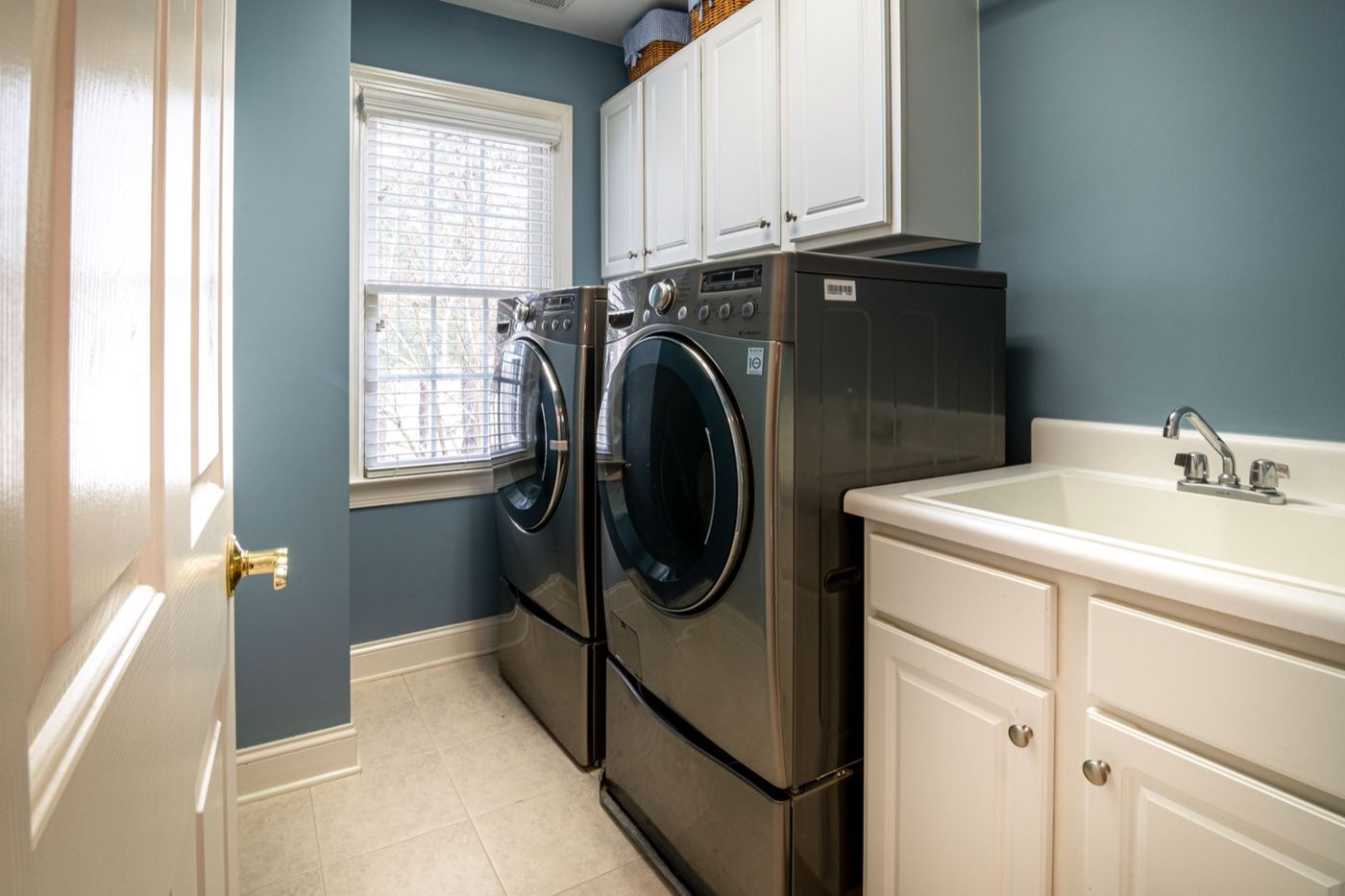
The most common cause is a clogged pump filter or coin trap, followed closely by a kinked or clogged drain hose. Both are safe to check yourself in a few minutes. If those are clear, the next most likely causes are a door switch that is not fully engaging or a load that triggered the balance sensor. Working through the causes below in order will point you toward the real issue fastest.
When a washer fills, agitates, and spins for a while but leaves the tub sitting in water at the end of the cycle, it is easy to assume the pump is dead. In practice, the cause is often something ordinary, a filter that needs clearing or a hose that got kinked when the machine was last moved, sitting alongside a handful of causes that genuinely do need a licensed technician.
Below are the eight causes we see most often, ordered from most to least common, along with the signs that separate one from another and an honest answer on whether it is safe to check yourself.
Jump to a cause
Clogged pump filter or coin trap
Most front-load and many top-load washers have a small access panel with a pump filter that catches coins, lint, hair ties, and other debris. When it fills up, water cannot pass through to the drain pump and the cycle ends with the tub still full.
- Small items like coins or buttons go missing after doing laundry
- A musty smell comes from the small access panel near the bottom front
- The washer drained fine last time and now suddenly does not
- The filter has not been cleaned in the last few months
Kinked or clogged drain hose
The drain hose carries wastewater from the pump to the household drain or standpipe. If it is bent sharply behind the machine, pinched against the wall, or clogged with lint and debris inside, water backs up instead of draining out.
- The washer was recently moved, reinstalled, or pushed back against the wall
- The hose looks flattened or has a sharp bend where it exits the machine
- Water drains partially, then stops rather than not draining at all
- Draining is noticeably slower than it used to be
Door or lid switch not engaging
Washers will not spin or drain unless the door or lid switch confirms the door is closed and locked. A worn switch, a door that does not latch fully, or a stuck lock mechanism can stop the drain step before it ever starts.
- The cycle pauses or stops right as it reaches the spin step
- The door feels loose or does not click firmly when closed
- The door lock light or indicator does not turn on
- The problem is inconsistent, sometimes it drains, sometimes it does not
Overloaded or unbalanced load
A load that is too heavy, too tightly packed, or unevenly distributed, a single heavy item like a comforter bunched to one side, can trigger the washer's balance sensor, which stops the spin step and leaves water and the load sitting in the tub.
- The problem happens most often with bedding, towels, or one heavy item
- The machine seemed to shake or thump before it stopped
- Redistributing the load and restarting the cycle fixes it
- The display shows an unbalance or similar error code
Drain pump jammed with debris
Beyond the filter, small objects like buttons, wire fragments, or an underwire can travel further into the pump housing and jam the impeller directly, so the pump runs but cannot move water.
- The pump hums or strains but no water actually moves
- The filter was already clear when you checked it
- The problem started right after washing an item with loose hardware
- Water sits at the same level no matter how long the cycle runs
Drain pump motor failure
The pump itself is driven by a small motor. If the motor windings fail or the pump seizes, the washer cannot generate any suction to move water out, regardless of how clear the filter and hose are.
- No humming, buzzing, or motor sound at all during the drain step
- The filter and hose were both confirmed clear
- The pump was already replaced once and the issue has returned
- A burning smell near the front or bottom of the machine
Blocked household drain line
Even a fully functional washer cannot drain if the standpipe or household drain line it empties into is blocked, whether by lint buildup over time or a clog further down the plumbing.
- Water backs up out of the standpipe or a nearby floor drain during the cycle
- A nearby utility sink also drains slowly
- The washer drains fine into a bucket but not into the wall connection
- The problem appeared right after other plumbing work in the house
Control board or timer malfunction
The control board tells the washer when to run the drain pump during the cycle. If the board's drain relay fails or the timer skips the step, the machine may never signal the pump to run at all.
- The pump never activates, not even a brief attempt
- Other functions like fill and agitate work normally
- Behavior is random or inconsistent across different cycles
- The display shows an error unrelated to drainage, or no error at all
Not sure which one matches? Start here
Washer stops mid-cycle with water still in the tub
- Most likely: door or lid switch or an unbalanced load
- Also check: the pump filter
Washer runs the full cycle but never drains at all
- Most likely: clogged pump filter or kinked drain hose
- Also check: drain pump motor and control board
Not sure which one it is?
Skip the guesswork. Tell us what you're seeing and a technician will help pin down the cause.
What to check yourself first
These items are safe to check without any tools beyond a shallow pan and a flashlight. Always drain any standing water before opening the pump filter.
Unplug the washer before removing any access panel, and keep a towel and shallow pan handy since water will run out once the filter is loosened.
Check the pump filter. Locate the small access panel near the bottom front and clear out any debris you find.
Inspect the drain hose. Pull the washer out and check for kinks, pinches, or a clog along its length.
Redistribute the load. Open the door, spread out bedding or heavy items evenly, and restart the cycle.
Confirm the door is latching. Close it firmly and listen for the lock to engage.
Check the standpipe. Look for water backing up around the drain connection itself.
When to call a professional
Some signs point straight to a licensed technician rather than a DIY fix. Call for service if you notice any of the following:
- No sound at all from the pump during the drain step
- A burning smell or a breaker that trips repeatedly
- You have checked the filter, hose, and load balance and it still will not drain
- Water is backing up into a nearby sink or floor drain
- The washer is still under manufacturer warranty, since a DIY repair can void it
Revive Appliance Repair handles washer drainage issues for homes and businesses throughout Walnut Creek and the surrounding service area. Our washer repair service covers diagnosis through completed repair, backed by a 90-day labor warranty.
You may also find these guides useful: troubleshooting a washer shaking during the spin cycle and a washer that won't start.