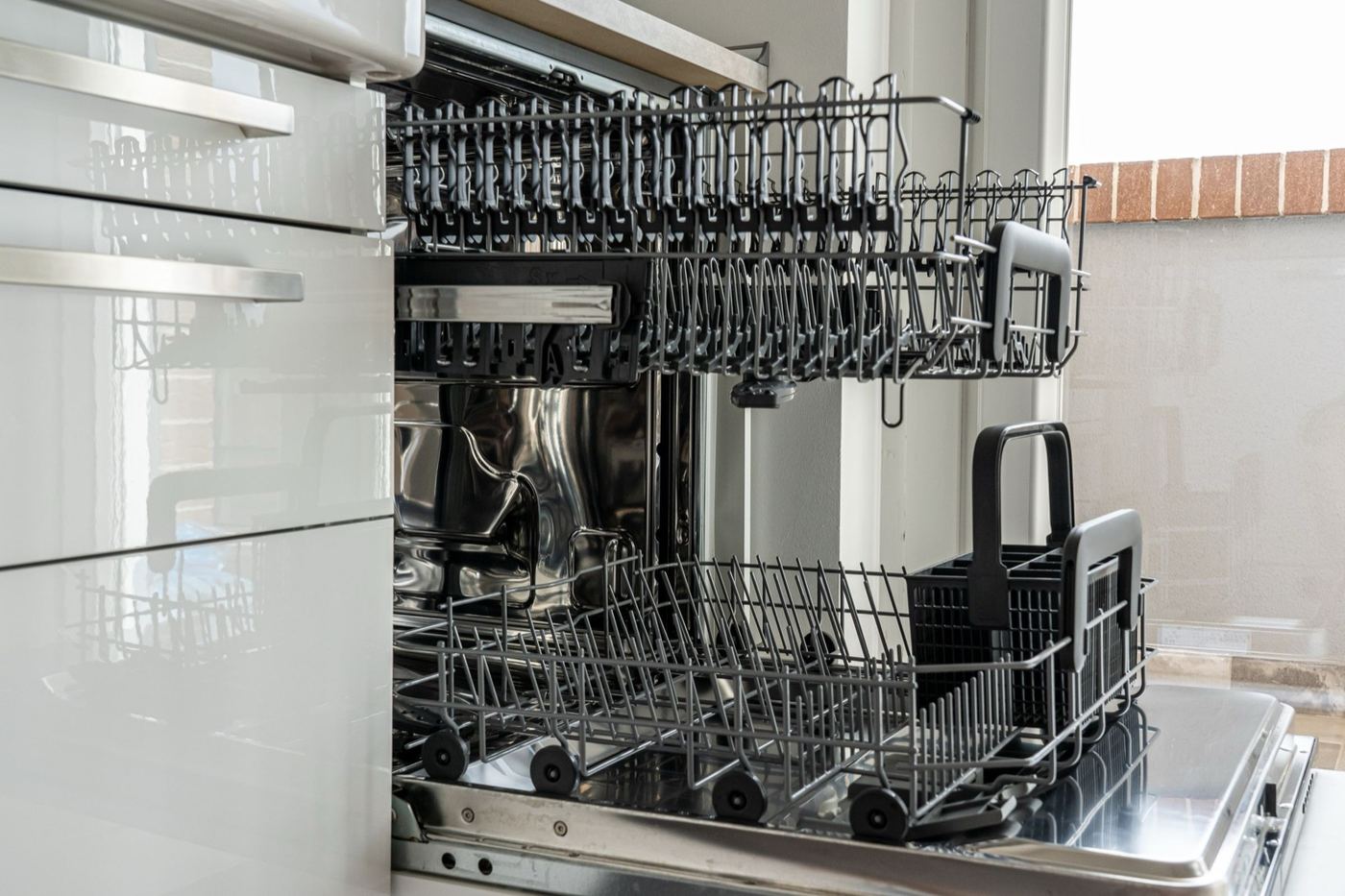
The most common cause is a clogged filter at the bottom of the tub, followed closely by a kinked or clogged drain hose. Both are safe to check in a few minutes. If the kitchen sink drains slowly too, the clog is probably in the shared drain line and not in the dishwasher itself. Working through the causes below in order will point you toward the real issue fastest.
When a dishwasher finishes its cycle and leaves a pool of dirty water in the tub, it is easy to assume the pump has died. In practice, the cause is often something ordinary, a filter full of debris or a clog in the sink line, sitting alongside a handful of causes that genuinely do need a licensed technician.
Below are the eight causes we see most often, ordered from most to least common, along with the signs that separate one from another and an honest answer on whether it is safe to check yourself.
Jump to a cause
Clogged filter or sump
Food debris, labels, and bits of broken glass collect in the filter at the bottom of the tub. When it clogs, water cannot reach the drain pump and stays in the tub after the cycle ends.
- Standing water sits at the bottom after the cycle
- A sour or food smell comes from the tub
- Grit or food debris is visible around the filter
- The filter has not been cleaned in several months
Kinked or clogged drain hose
The drain hose carries water from the pump to the sink drain or disposal. If it is kinked behind the dishwasher, pinched against a cabinet, or packed with debris, the water backs up instead of leaving.
- The dishwasher was recently pulled out or reinstalled
- Water drains partly, then stops
- The hose looks flattened or sharply bent where it can be seen
- A gurgling sound comes from the sink during draining
Garbage disposal clogged or knockout plug still in place
Many dishwashers drain into the garbage disposal. On a new disposal, a small plug in the dishwasher inlet has to be knocked out first, and a disposal full of food waste blocks the inlet just the same.
- The problem began right after a new disposal was installed
- Water backs up into the sink when the dishwasher drains
- Food waste sits in the disposal and the sink drains slowly
- The disposal hums or runs sluggishly
Blocked air gap or missing high loop
To stop sink water from flowing back into the dishwasher, the drain line either rises into a high loop under the counter or passes through an air gap on the sink. A clogged air gap or a loop that is missing or sagging can stop the drainage.
- Water spurts or leaks from the air gap cap on the sink
- The dishwasher drains slowly and the sink water seems to flow back into it
- The drain hose hangs low under the sink instead of rising
- The problem started after a recent install or a repair
Clogged kitchen sink drain line
The dishwasher shares the sink's drain line, so a clog further down can stop it from draining no matter how clean the dishwasher is.
- The kitchen sink drains slowly as well
- Water comes up in the sink when the dishwasher drains
- Other drains in the house are slow or gurgle
- The sink has been backing up for some time
Stuck or failed check valve
A small check valve in the drain system lets water out but stops dirty water from flowing back in. If it sticks or fails, water either cannot leave or runs back into the tub.
- A small amount of water returns to the tub after the pump stops
- Dirty water appears in the tub right after the cycle
- Draining is poor even though the filter and hose are clear
- The problem developed gradually over weeks
Jammed or failed drain pump
The drain pump pushes water out of the tub. A piece of broken glass or a small object can jam its impeller, or the pump motor can wear out and stop moving water.
- A humming or buzzing at the drain step, but the water stays
- A grinding or rattling sound while it tries to drain
- The filter and hose were both confirmed clear
- A burning smell near the bottom front of the dishwasher
Control board or drain relay fault
The control board tells the pump when to run. If the board or its drain relay fails, the pump may never get the signal even though the pump itself is fine.
- No sound at all at the drain step
- Other cycle functions work normally
- The behavior is random from one cycle to the next
- The display shows an error unrelated to draining, or no error at all
Not sure which one matches? Start here
The kitchen sink drains slowly too, or water comes up in the sink
- Most likely: clogged sink drain line or garbage disposal
- Also check: air gap or high loop
The dishwasher hums at the drain step, but the water stays
- Most likely: clogged filter or drain pump
- Also check: drain hose
Not sure which one it is?
Skip the guesswork. Tell us what you're seeing and a technician will help pin down the cause.
What to check yourself first
These items are safe to check without tools beyond a towel and a soft brush. Scoop out the standing water with a cup before you start, so you can see the filter.
Unplug the dishwasher or switch off its breaker before reaching into the bottom of the tub, wear gloves since broken glass can collect in the filter, and never put your hand into the garbage disposal.
Check the filter. Remove the lower rack, take out the filter, and rinse off any debris.
Look at the drain hose. Check the visible part under the sink for kinks or a low, sagging loop.
Run the garbage disposal. Clear any food waste so the dishwasher can drain into it.
Clean the air gap, if you have one. Lift off the cap on the sink and clear out any debris.
Test the sink. If it drains slowly too, clear that clog first and run the dishwasher again.
When to call a professional
Some signs point straight to a licensed technician rather than a DIY fix. Call for service if you notice any of the following:
- Water is still standing after you cleaned the filter and checked the hose and air gap
- A humming, buzzing, or grinding sound at the drain step
- Dirty water or a bad smell backing up into the sink
- A burning smell near the bottom of the dishwasher, or a breaker that trips
- The dishwasher is still under manufacturer warranty, since a DIY repair can void it
Revive Appliance Repair handles dishwasher drainage issues for homes and businesses throughout Walnut Creek and the surrounding service area. Our dishwasher repair service covers diagnosis through completed repair, backed by a 90-day labor warranty.
You may also find these guides useful: troubleshooting a dishwasher that is not cleaning and a washer that won't drain.