
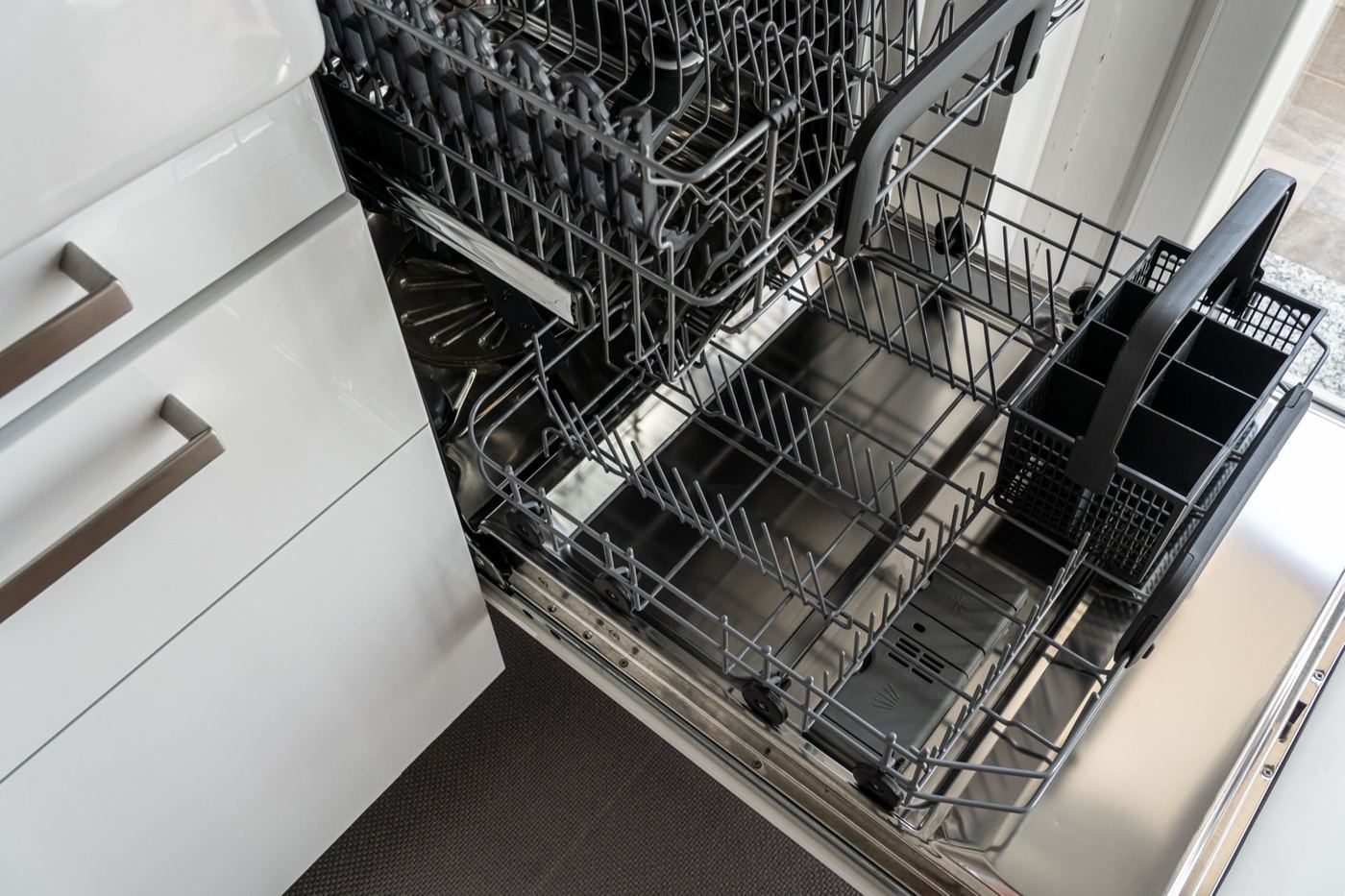
If dishes have a cloudy film or white spots, the most common cause is hard water mineral buildup, an easy fix with a descaling rinse and rinse aid. If dishes still have visible food residue, the next most likely causes are a clogged spray arm or a filter that needs cleaning, both simple checks you can do yourself in a few minutes.
When a dishwasher runs its full cycle, sounds normal, and still leaves dishes spotty or coated in leftover food, it is easy to assume the whole unit is wearing out. In practice, the cause is almost always something blocking water from reaching the dishes properly, a clogged spray arm hole or a filter due for a rinse, sitting alongside a smaller set of causes that genuinely need a licensed technician.
Below are the eight causes we see most often, ordered from most to least common, along with the signs that separate one from another and an honest answer on whether it is safe to check yourself.
Jump to a cause
Clogged or blocked spray arm
The spray arms shoot pressurized water onto dishes as they spin. When food particles or mineral deposits clog the small holes, water sprays weakly or in the wrong direction, leaving dishes only partially rinsed.
- Dishes on one side or level come out cleaner than others
- Visible debris or crusted deposits in the spray arm holes
- The spray arm does not spin freely when turned by hand
- The problem developed gradually as buildup accumulated
Clogged filter
Most modern dishwashers use a removable filter at the bottom of the tub to catch food particles instead of grinding them up. When it fills with debris, dirty water recirculates onto the dishes instead of draining away clean.
- A musty smell inside the dishwasher
- Visible food debris sitting in the bottom of the tub
- Dishes come out with bits of food redeposited on them
- The filter has not been removed and rinsed in recent memory
Hard water mineral buildup
In areas with hard water, minerals like calcium and magnesium build up on the spray arms, heating element, and interior walls over time, leaving a cloudy film on dishes and glassware and gradually reducing spray pressure.
- A cloudy white film or spots, especially on glassware
- Chalky white residue visible inside the tub or on the door gasket
- Results are worse during seasons when local water runs harder
- A rinse aid or dishwasher cleaner noticeably improves results
Water not hot enough
Hot water helps dissolve detergent and melt away grease. If the home's water heater is set too low, or the dishwasher's own heating element has failed, the water entering the tub may never get hot enough to clean effectively.
- Greasy or oily residue left on dishes, not just spots
- The water heater was recently adjusted, replaced, or is set low
- Detergent pods or powder do not fully dissolve during the cycle
- Water inside the dishwasher does not feel hot right after a cycle
Wrong or insufficient detergent
Old, clumped, or expired detergent does not dissolve properly, and using regular dish soap instead of dishwasher detergent creates excess suds that interfere with the spray pattern and can trigger error codes.
- Detergent pod or powder is stuck in the dispenser at the end of the cycle
- Detergent has been stored somewhere humid and looks clumped
- Regular dish soap was used in place of dishwasher detergent
- Suds are visible when the door is opened mid-cycle
Overloading or blocking spray arm rotation
A large pot, an oversized tray, or dishes packed too tightly can physically block a spray arm from spinning freely, or shield nearby dishes from ever getting sprayed at all.
- The problem started with a specific load, like a large baking sheet
- Dishes directly under or beside large items are the ones left dirty
- Spinning the spray arm by hand meets resistance from a dish
- Loading dishes with more space between them improves results
Failed circulation pump
The circulation pump pressurizes water and pushes it up through the spray arms throughout the wash cycle. When it wears out or seizes, water pressure drops across the board, regardless of how clean the filter or spray arms are.
- Wash sounds noticeably quieter or different than usual
- The problem affects the entire load, not just certain dishes
- The filter and spray arms have already been checked and cleaned
- A humming sound occurs with little or no visible water movement
Inlet water valve not opening fully
The water inlet valve controls how much water enters the tub for each fill. If it does not open fully, the dishwasher may run its full cycle without ever filling with enough water to properly wash and rinse the dishes.
- Less water than usual is visible in the tub during the cycle
- The dishwasher seems to run through cycles faster than normal
- A clicking sound occurs at the fill stage without much water entering
- Household water pressure elsewhere in the home is normal
Not sure which one matches? Start here
Dishes have a cloudy film or white spots
- Most likely: hard water buildup
- Also check: water temperature
Dishes have visible food residue left on them
- Most likely: clogged spray arm or clogged filter
- Also check: overloading the racks
Not sure which one it is?
Skip the guesswork. Tell us what you're seeing and a technician will help pin down the cause.
What to check yourself first
These items are safe to check without any tools beyond a toothpick and a bit of dish soap.
Always let the dishwasher finish its cycle and cool down before reaching inside to remove the filter or spray arms.
Clean the filter. Remove it according to your manual and rinse away trapped food debris.
Clear the spray arm holes. Remove the arms if possible and clear each hole with a toothpick.
Check your detergent. Confirm it is fresh, dishwasher-specific, and not clumped or expired.
Rearrange the load. Make sure no large dish blocks a spray arm from spinning freely.
Run a descaling cycle. A hot cycle with a descaling product can rule out hard water buildup.
When to call a professional
Some signs point straight to a licensed technician rather than a DIY fix. Call for service if you notice any of the following:
- A humming or straining sound with little visible water movement
- Noticeably less water filling the tub than usual
- You have checked the filter, spray arms, and detergent and results are still poor
- Water pooling underneath or around the dishwasher
- The dishwasher is still under manufacturer warranty, since a DIY repair can void it
Revive Appliance Repair handles dishwasher cleaning and performance issues for homes and businesses throughout Walnut Creek and the surrounding service area. Our dishwasher repair service covers diagnosis through completed repair, backed by a 90-day labor warranty.
You may also find these guides useful: troubleshooting a dishwasher that is not draining and a washer that won't drain.