
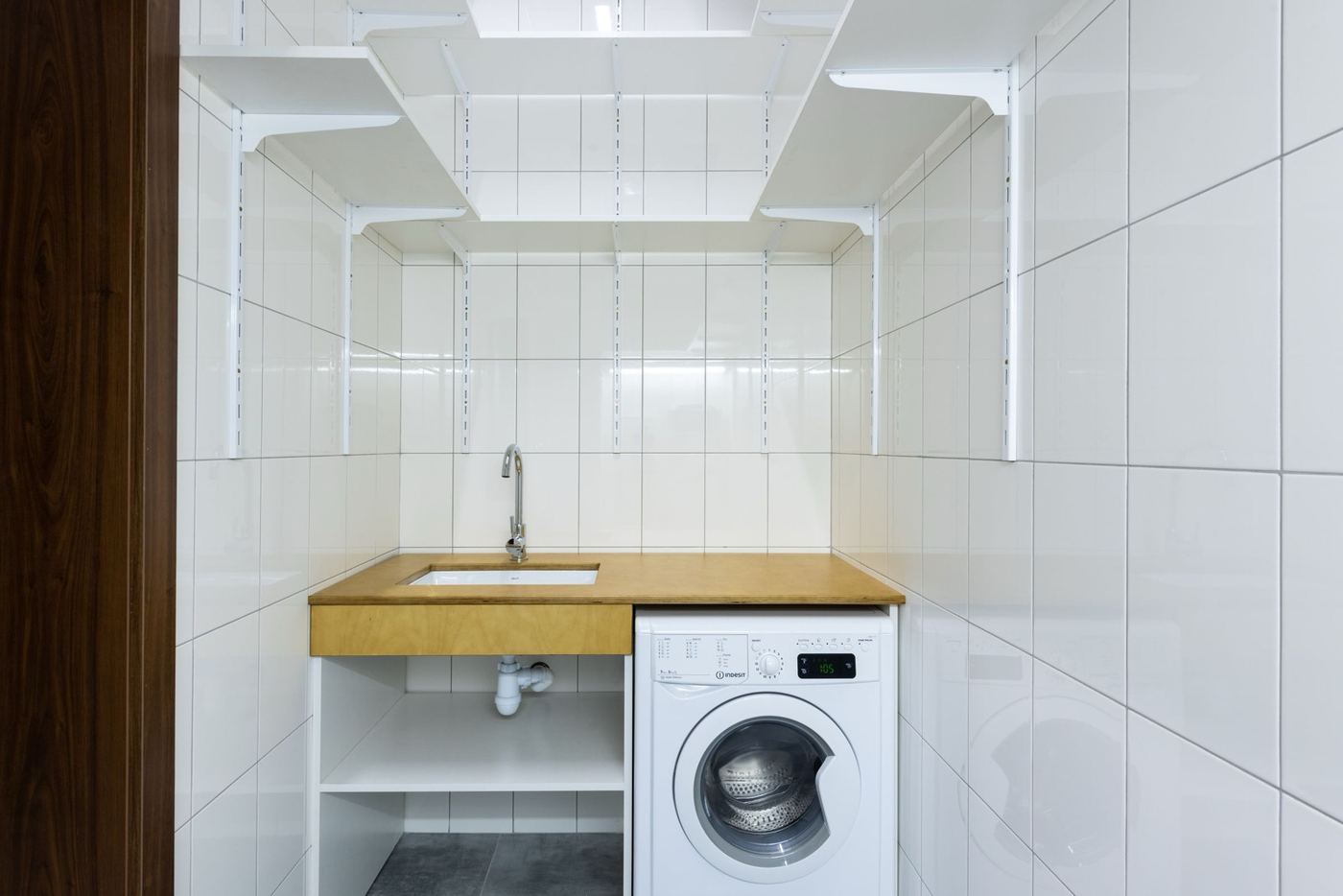
The most common cause is leftover shipping bolts on a newly installed washer, followed closely by a machine that is not sitting level. Both are safe to check yourself in a few minutes. If those are clear, the next most likely causes are an unbalanced or overloaded load. Working through the causes below in order will point you toward the real issue fastest.
When a washer shakes hard, bangs loudly, or walks across the floor during the spin cycle, it is easy to assume something inside has broken. In practice, the cause is often something simple, a bolt that was never removed or a foot that was never leveled, sitting alongside a handful of causes that genuinely do need a licensed technician.
Below are the eight causes we see most often, ordered from most to least common, along with the signs that separate one from another and an honest answer on whether it is safe to check yourself.
Jump to a cause
Shipping bolts still installed
Washers ship with bolts that lock the drum in place to prevent damage during transport. If they are not removed during installation, the drum cannot move or balance itself during the spin cycle, causing violent shaking and loud banging.
- The washer was recently delivered or installed
- Shaking is severe, more like banging than a gentle wobble
- Bolt holes with plastic caps are visible on the back panel
- The installer or delivery team did not mention removing shipping hardware
Washer not sitting level
All four feet need to sit evenly on the floor and support equal weight. A washer that rocks even slightly when pushed will amplify that rocking dramatically once the drum reaches full spin speed.
- The washer rocks when you press down on a corner of the top
- Shaking has been present since installation or after the washer was moved
- A level placed on top shows the machine is tilted
- The floor underneath is uneven or the feet have not been adjusted
Unbalanced or uneven load
A single heavy item, like a comforter or a load of towels that clumps to one side, shifts the washer's center of gravity as it spins, causing the whole machine to rock even when everything else about it is working correctly.
- The problem happens with specific loads, like bedding or a single heavy item
- Smaller, mixed loads spin without any shaking
- Redistributing the load by hand and restarting the cycle fixes it
- The display shows an unbalance or similar error code
Overloading the washer
Packing the drum too full leaves no room for the load to redistribute itself as it spins. Even a well-balanced load can throw the machine off if there simply isn't enough space for items to settle evenly.
- The drum is packed tightly with little room to see movement when empty
- Shaking happens on large loads but not smaller ones
- Items come out more tangled or twisted than usual
- Removing a few items and running the cycle again resolves it
Worn or damaged suspension
The suspension system, shocks on front-loaders or springs on top-loaders, absorbs and dampens the drum's movement during spin. As these wear out over years of use, they stop controlling that movement, letting the drum swing more than it should.
- Shaking has gradually worsened over months rather than appearing suddenly
- The washer is several years old and has had heavy regular use
- A visual check shows a shock or spring that looks loose, broken, or disconnected
- The problem happens even with small, well-balanced loads
Worn tub bearing
The bearing supports the inner drum and lets it spin smoothly inside the outer tub. Once it wears out, the drum can wobble on its axis, producing a grinding noise along with the shaking, usually worse at higher spin speeds.
- A grinding or rumbling noise accompanies the shaking, especially during spin
- Noise and shaking increase as spin speed increases
- The washer is older with significant hours of use
- The drum feels loose or wobbles when pushed by hand with the washer unplugged
Loose or shifted counterweight
Concrete or metal counterweights are bolted to the outer tub to help offset the forces created during spin. If a mounting bolt loosens, often after the washer is moved or bumped, the counterweight can shift and throw the whole balance system off.
- The problem started after the washer was moved, delivered, or bumped
- A knocking or thudding sound comes from inside the cabinet
- Shaking is inconsistent rather than tied to specific loads
- The top or cabinet panel feels loose when touched during operation
Worn motor mount or drive component
On some models, the motor itself is mounted with rubber isolators to reduce vibration, or connects to the drum through a belt and pulley system. When these wear out or loosen, the motor's own vibration transfers directly into the cabinet instead of being absorbed.
- Shaking is present even when the washer is simply agitating, not just spinning
- A rubber mount looks cracked, collapsed, or missing when inspected
- The problem is accompanied by a burning rubber smell on belt-driven models
- The washer is a top-loader with a visible belt and pulley system
Not sure which one matches? Start here
Washer shakes violently right after a new installation
- Most likely: shipping bolts
- Also check: washer level
Shaking has gradually worsened over months, with a grinding noise
- Most likely: worn tub bearing
- Also check: worn suspension
Not sure which one it is?
Skip the guesswork. Tell us what you're seeing and a technician will help pin down the cause.
What to check yourself first
These items are safe to check without any tools beyond a level and a wrench. Always unplug the washer before inspecting anything underneath or behind it.
Unplug the washer and pull it away from the wall before inspecting the suspension, counterweight, or any component underneath the cabinet.
Check for shipping bolts. Look at the back panel for plastic-capped bolt holes and remove any bolts still in place.
Check that the washer is level. Place a level on top and adjust the feet until it reads even in both directions.
Redistribute the load. Open the door, spread bedding or heavy items evenly around the drum, and restart the cycle.
Reduce the load size. Split large loads into two smaller ones and rerun the cycle.
Inspect the suspension and counterweight. With the washer unplugged and pulled out, look for a visibly loose or disconnected part.
When to call a professional
Some signs point straight to a licensed technician rather than a DIY fix. Call for service if you notice any of the following:
- Loud banging or the washer visibly walking across the floor
- A grinding or rumbling noise that gets louder as spin speed increases
- Shaking that happens even with small, well-balanced loads
- A burning rubber smell during the cycle
- The washer is still under manufacturer warranty, since a DIY repair can void it
Revive Appliance Repair handles washer vibration and balance issues for homes and businesses throughout Walnut Creek and the surrounding service area. Our washer repair service covers diagnosis through completed repair, backed by a 90-day labor warranty.
You may also find these guides useful: troubleshooting a washer that won't drain and a dryer that takes too long to dry.