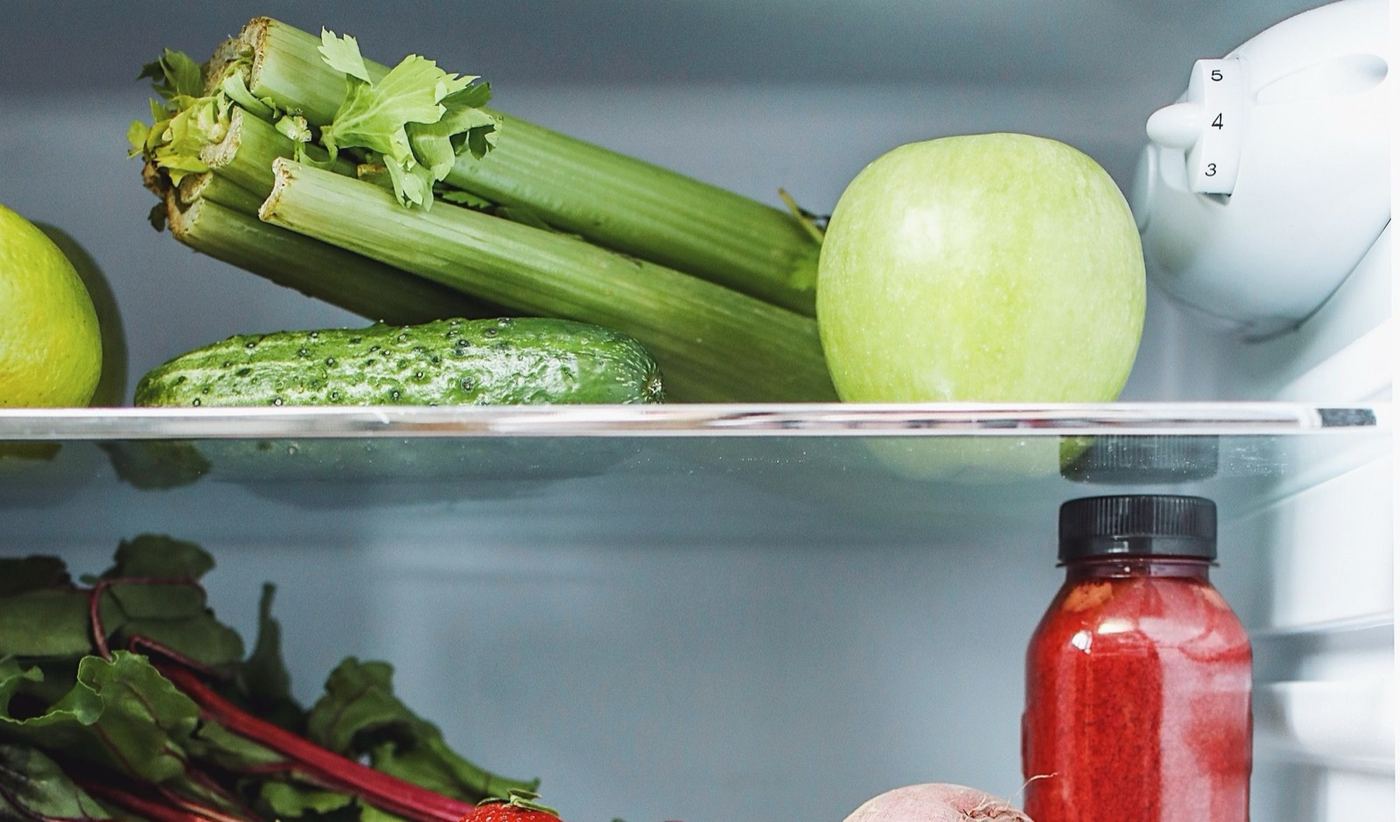
Set the refrigerator to about 37°F (3°C) and the freezer to 0°F (-18°C). The food-safety limit for the refrigerator is 40°F (4°C). Warmer than that, bacteria grow faster. Much colder than 35°F (2°C), lettuce and drinks start to freeze. Check it with a thermometer, not with the dial.
Most people never look at their refrigerator temperature until the milk turns early or the lettuce freezes. A few degrees make a real difference to how long food lasts and whether it stays safe, and the dial on the refrigerator is only a setting, not a reading.
Below are the target numbers, a simple way to check the real temperature, how to adjust it, and what to do when the refrigerator cannot hold the right temperature.
Jump to a section
The safe and ideal temperatures
Refrigerator
Bacteria multiply quickly above 40°F (4°C), so that is the hard upper limit. Setting the refrigerator to about 37°F (3°C) leaves a safety margin and keeps milk, meat, and leftovers fresh longer, without freezing lettuce or drinks.
- Best setting: about 37°F (3°C)
- Ideal range: 35°F to 38°F (2°C to 3°C)
- Never above 40°F (4°C)
- Door shelves run a few degrees warmer than the middle shelves
Freezer
At 0°F (-18°C) food stays safe, and frozen food keeps its quality the longest. In a warmer freezer, ice crystals grow and food loses quality faster.
- Target: 0°F (-18°C) or lower
- Ice cream should stay firm, not soft
- Frost on frozen packages can mean warm spells or a door that was left open
How to check the temperature
The number on the dial or the display is only a setting. To know the real temperature, use a separate appliance thermometer and read it after the refrigerator has had time to settle.
Get an appliance thermometer made for refrigerators and freezers.
Put it in a glass of water on the middle shelf, away from the door and the back wall.
Leave it for at least five hours, or overnight, and keep the door closed as much as possible.
Read it quickly, then check the freezer the same way with the thermometer between frozen packages.
Check at different times of day, since the temperature moves up and down with the cooling cycle.
Temperature will not stay right?
Skip the guesswork. Tell us what you're seeing and a technician will help pin down the cause.
How to adjust it
Most refrigerators have a dial inside the refrigerator section, or buttons and a display on the door or inside. Check your manual for the exact location.
Find the control. It is a dial or a set of buttons inside the refrigerator, or a display on the door.
Change it one step at a time. Large jumps make the refrigerator overshoot.
Wait 24 hours before measuring again, since the temperature needs time to settle.
If the freezer has its own control, set it first, because on many models the freezer also cools the refrigerator section.
Avoid the coldest setting for long. It can freeze food and waste energy.
Signs the temperature is wrong
You do not always need a thermometer to tell. Food and the inside of the refrigerator show it.
Too warm
A refrigerator that runs above 40°F (4°C) lets food spoil sooner and is a health risk.
- Milk, eggs, or leftovers spoil sooner than the dates suggest
- Condensation or water droplets on the shelves and walls
- Ice cream or frozen food is soft or partly thawed
- The thermometer reads above 40°F (4°C)
Too cold
A refrigerator that runs too cold wastes energy and can ruin fresh food.
- Lettuce, herbs, or drinks freeze at the back of a shelf
- Ice crystals or frost on food and walls in the refrigerator section
- Eggs crack or bottles burst
- The dial is set to the coldest setting
Why the temperature drifts
If the temperature will not stay in range even after you adjust it, look at these first before blaming the refrigerator itself.
- A door gasket that is worn or dirty, or a door that does not close fully
- Shelves packed so tightly that food blocks the air vents
- Hot food or large loads of groceries put in at once
- Dusty condenser coils, or a refrigerator pushed tight against a wall or placed near heat. See our guide on a refrigerator making noise for how to clean the coils
- A failing part such as a fan, a thermostat, or the defrost system. See our guide on a refrigerator that is not cooling
If the refrigerator was above 40°F (4°C) for more than two hours, throw out perishable food such as meat, dairy, and leftovers, and do not rely on smell or look to judge it.
When to call a professional
Some signs point straight to a licensed technician rather than a DIY fix. Call for service if you notice any of the following:
- The refrigerator stays above 40°F (4°C) after you adjusted the setting and waited 24 hours
- Food keeps freezing even on a normal setting
- Heavy frost or ice builds up in the refrigerator or the freezer
- The refrigerator runs constantly, or you hear loud buzzing, grinding, or clicking
- The refrigerator is still under manufacturer warranty, since a DIY repair can void it
Revive Appliance Repair handles refrigerator temperature problems for homes and businesses throughout Walnut Creek and the surrounding service area. Our refrigerator repair service covers diagnosis through completed repair, backed by a 90-day labor warranty.
You may also find these guides useful: troubleshooting a refrigerator that is not cooling and a refrigerator making noise.