
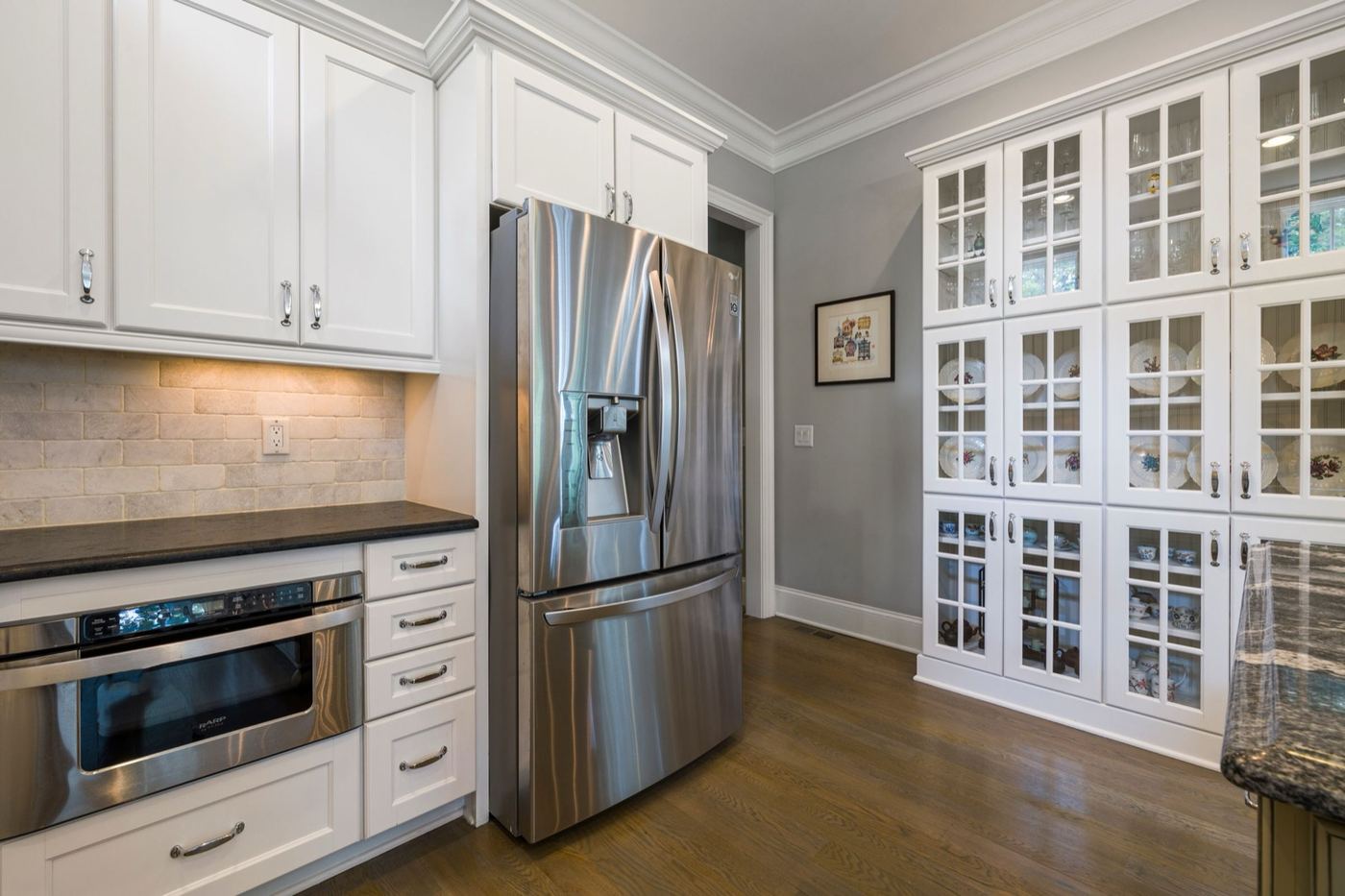
The most common cause is a clogged or frozen defrost drain, which sends water pooling under the crisper drawers. If the puddle is behind or under the refrigerator instead, check the water supply line and the filter first. Both are safe to look at in a few minutes. Working through the causes below in order will point you toward the real issue fastest.
When water shows up on the kitchen floor or at the bottom of the refrigerator, it is easy to assume the unit has failed. In practice, the source is often something small, a drain that needs clearing or a fitting that loosened, sitting alongside a few causes that genuinely do need a licensed technician.
Below are the eight causes we see most often, ordered from most to least common, along with the signs that separate one from another and an honest answer on whether it is safe to check yourself.
Jump to a cause
Clogged or frozen defrost drain
During each defrost cycle, melted frost runs down a small drain into a pan under the refrigerator. When that drain clogs with food debris or freezes over, the water has nowhere to go and backs up into the fresh food compartment, often pooling under the crisper drawers.
- Water collects at the bottom of the refrigerator, under the crisper drawers
- Ice builds up on the freezer floor or behind the back panel
- The leak appears every day or two, in step with the defrost cycle
- Nothing is leaking from the door, the dispenser, or the back of the unit
Loose or damaged water supply line
Refrigerators with an ice maker or dispenser connect to the house plumbing through a thin supply line. A kinked line, a worn fitting, or a connection that loosened after the refrigerator was moved can drip steadily onto the floor behind or beneath the unit.
- The puddle forms behind or directly under the refrigerator, not inside it
- Water appears even when nobody uses the dispenser or ice maker
- The refrigerator was recently moved, cleaned behind, or reinstalled
- The supply line looks flattened, bent, or damp near a fitting
Water filter housing leak
The water filter sits in a housing that is pressurized every time the dispenser or ice maker runs. A filter that was not seated fully, a cracked cartridge, or a worn housing seal lets water seep out around it.
- Water drips from the filter area, inside the refrigerator or at the base grille
- The leak started right after the filter was changed
- The filter is overdue for replacement or looks cracked
- Dripping gets worse when you dispense water or the ice maker fills
Worn or dirty door gasket
The rubber gasket around the door keeps humid room air out. When it is torn, dried out, or covered in residue, warm air slips in, moisture condenses on cold surfaces, and water drips down the walls and onto the shelves or the floor.
- Condensation or droplets form along the door edge or on the shelves
- The gasket looks cracked, flattened, or has a visible gap
- A sheet of paper slides out easily when the door is closed on it
- Frost builds up near the door seal as well
Ice maker or dispenser leak
The ice maker fill tube and the dispenser line carry water through cold parts of the door and freezer. If the fill tube freezes, shifts out of place, or the dispenser tubing loosens, water drips where it should not and often refreezes into a block of ice.
- Water or a block of ice appears under or around the ice maker
- The leak shows up only after dispensing water or making ice
- Ice cubes are small, hollow, or fused together
- A thin line of ice runs down the freezer wall
Failing water inlet valve
The inlet valve opens to let water into the ice maker and dispenser, and closes the rest of the time. If it fails or does not seal, water can trickle through even when it should be off, leaking from the line or overfilling the ice maker.
- Water keeps dripping from the ice maker or the fill tube all day
- The ice maker overfills or produces a solid block of ice
- A faint hissing or dripping sound is heard from behind the refrigerator
- The supply line, fittings, and filter were all checked and are dry
Cracked or overflowing drain pan
The drain pan under the refrigerator catches water from the defrost drain and lets it evaporate. A pan that is cracked, shifted out of place, or too full can spill onto the floor, usually in a slow, steady pattern near the front.
- Water appears on the floor near the front or underneath the refrigerator
- The pan, when pulled out, shows a crack or is full of water
- The puddle comes back slowly after being wiped up
- The refrigerator is also running warm or running constantly
Defrost system failure
When the defrost heater, thermostat, or control stops working, frost builds up on the evaporator coils until it melts unevenly and overwhelms the drain. The result is a heavy leak, often alongside ice on the back wall of the freezer.
- A thick layer of frost covers the back wall of the freezer
- The leak returns soon after you clear the drain
- Food in the refrigerator section is warmer than usual
- The problem has gotten steadily worse over weeks
Not sure which one matches? Start here
Water pooling inside, under the crisper drawers or along the back wall
- Most likely: clogged defrost drain
- Also check: door gasket and defrost system
Puddle behind or under the refrigerator that keeps growing
- Most likely: water supply line or inlet valve
- Also check: drain pan
Not sure which one it is?
Skip the guesswork. Tell us what you're seeing and a technician will help pin down the cause.
What to check yourself first
These items are safe to check without tools beyond a towel and a flashlight. Dry the floor first so you can tell whether the leak is still active.
Unplug the refrigerator and shut off its water supply before pulling it away from the wall, and keep the floor dry to avoid slipping.
Find where the water is. Note whether it sits inside the refrigerator, in front, or behind and underneath it.
Look at the freezer floor and back wall. Ice buildup there points toward the defrost drain.
Inspect the water filter. Turn it out, reseat it until it locks, and check for cracks or drips.
Check the supply line behind the unit for kinks, damp fittings, or drips at the connection.
Test the door seals. Close a sheet of paper in the door and see whether it slides out easily.
When to call a professional
Some signs point straight to a licensed technician rather than a DIY fix. Call for service if you notice any of the following:
- Water keeps pooling after you checked the filter, supply line, and door seals
- Water near the plug or an outlet, or a breaker that trips
- Thick ice on the freezer back wall that returns soon after clearing
- A water connection that keeps dripping after you tightened it
- The refrigerator is still under manufacturer warranty, since a DIY repair can void it
Revive Appliance Repair handles refrigerator leaks for homes and businesses throughout Walnut Creek and the surrounding service area. Our refrigerator repair service covers diagnosis through completed repair, backed by a 90-day labor warranty.
You may also find these guides useful: troubleshooting an ice maker that stopped making ice and a refrigerator that is not cooling.